01 Pick your destination
Solar Exploration
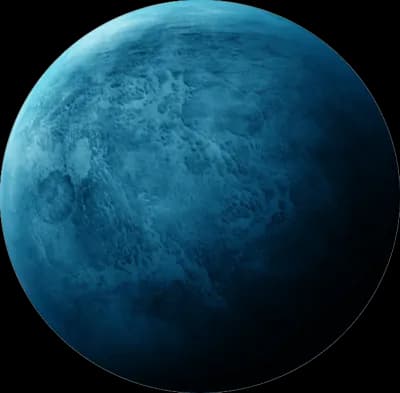
Uranus
The tilted ice giant
Avg. Distance
Year Length
Moons
Composition
Ice giant — water, ammonia and methane ices over a rocky core
Surface Gravity
8.69 m/s²
Mean Temperature
-195°C
Atmosphere
Hydrogen, helium and methane (gives its blue-green tint)
About Uranus
Overview & Geology
Uranus is the solar system's most unusual planet in one striking respect: it rotates almost completely on its side, tilted at 98 degrees relative to its orbit, likely the result of a colossal collision early in its history. This sideways spin means each pole gets roughly 42 years of continuous sunlight followed by 42 years of darkness as the planet slowly circles the Sun.
Classified as an 'ice giant' rather than a gas giant like Jupiter and Saturn, Uranus is made largely of water, ammonia and methane ices surrounding a small rocky core. Methane in its upper atmosphere absorbs red light and reflects blue-green light back into space, giving Uranus its pale cyan color — a subtler, colder-looking counterpart to Neptune's deeper blue.
Uranus holds the record for the coldest planetary atmosphere in the solar system, dipping to around -224°C in its upper layers despite not being the most distant planet from the Sun — a puzzle scientists still don't fully understand, since Uranus radiates almost no internal heat compared to the other giant planets. It has a faint ring system, discovered in 1977 when it briefly blocked the light of a background star, and a set of 13 known rings far dimmer than Saturn's.
Historical Missions
Exploration Milestones
Uranus's extreme distance and dim brightness meant it wasn't even recognized as a planet until 1781, and to date it has been visited by only a single spacecraft on a brief flyby — no dedicated orbiter mission has ever been sent, making it one of the least-understood planets up close.
Voyager 2
1986The only spacecraft ever to visit Uranus, discovering 10 new moons and confirming its extreme axial tilt and faint ring system during a single flyby.
NASA Gallery
Real Mission Photos
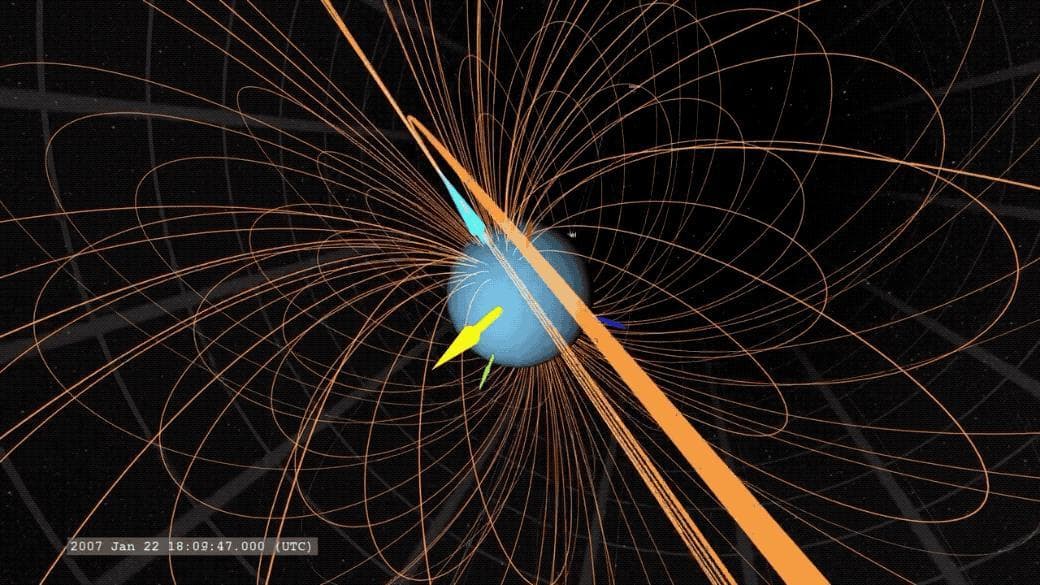
GIF of Uranus' Magnetic Field
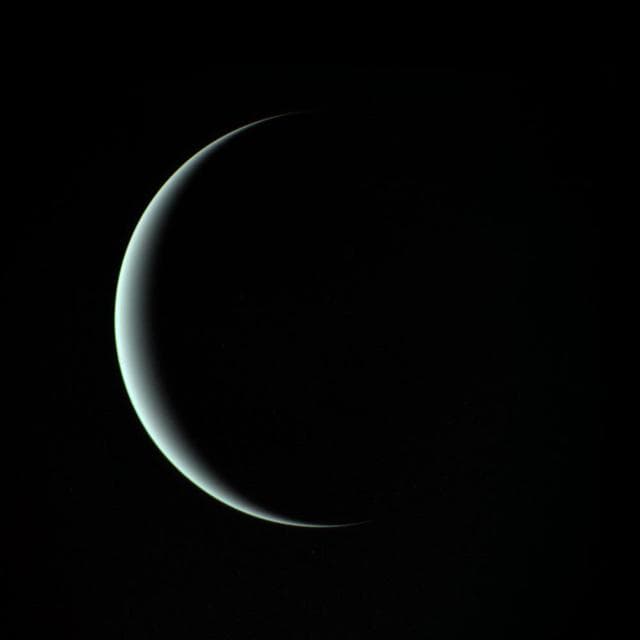
Uranus
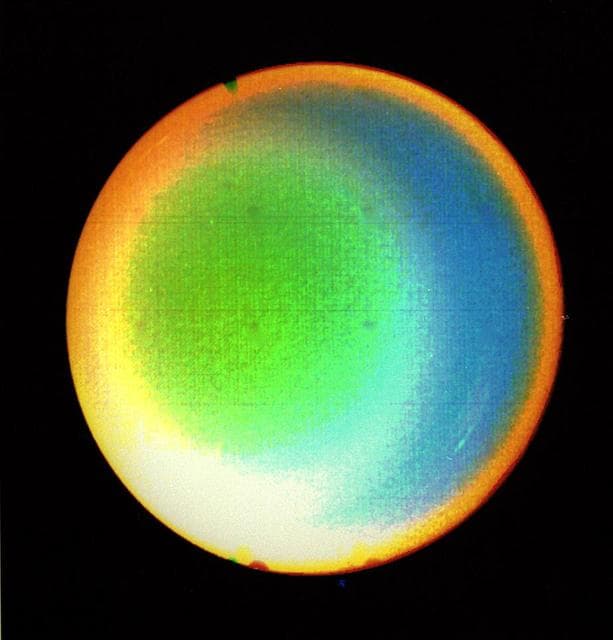
Uranus Atmosphere
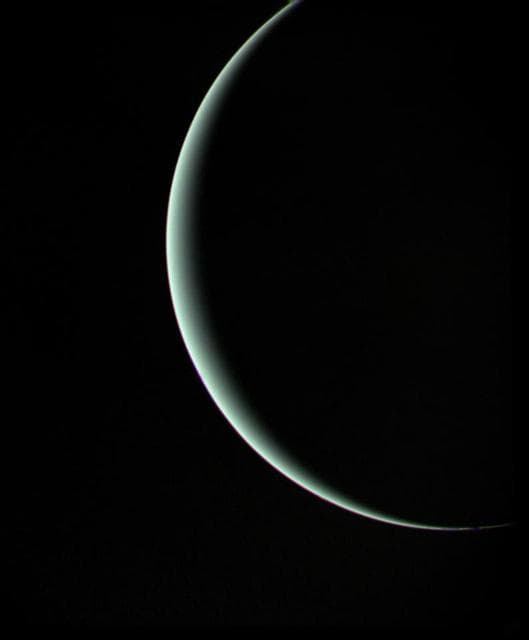
Uranus - Final Image
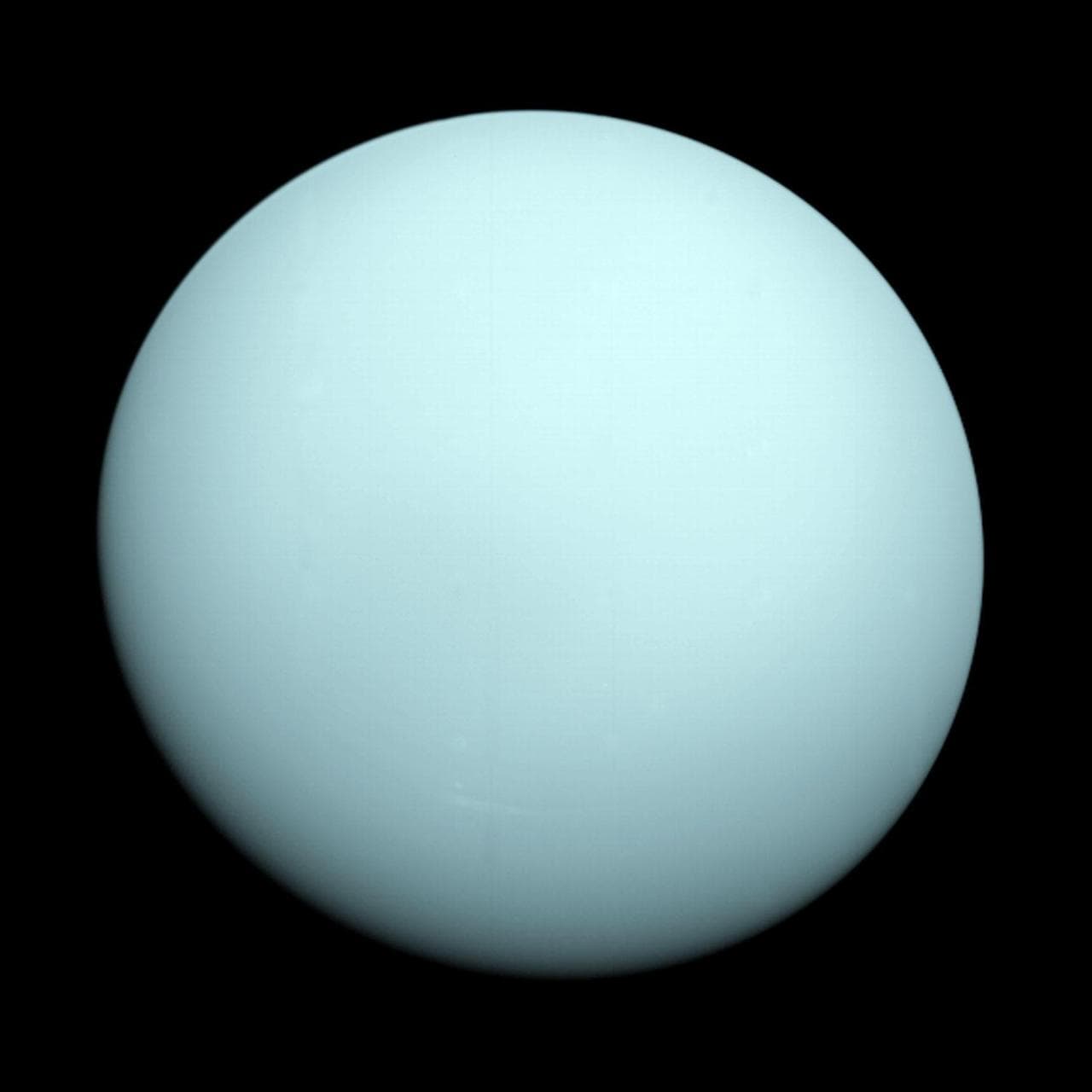
Uranus as seen by NASA Voyager 2
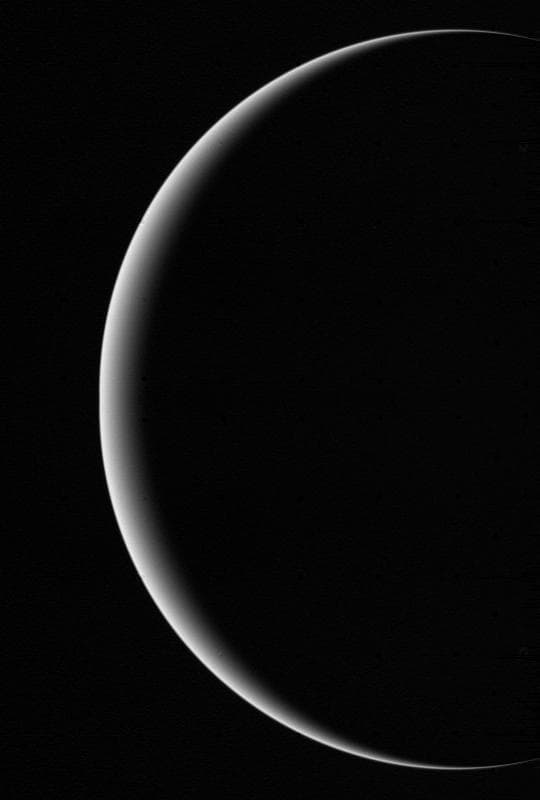
Color Voyager 2 Image Showing Crescent Uranus
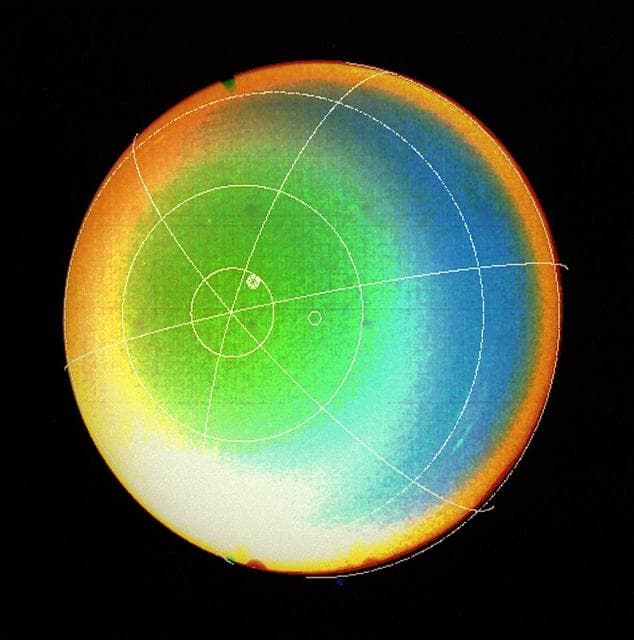
Uranus Atmosphere