01 Pick your destination
Solar Exploration
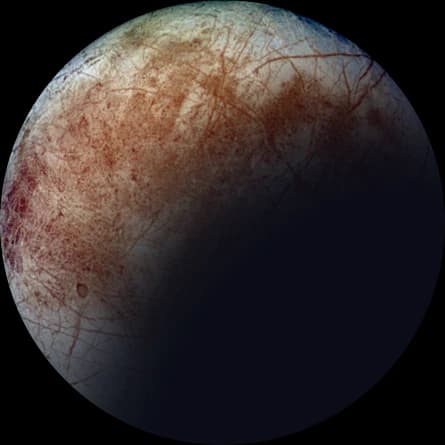
Europa
The ocean moon of Jupiter
Avg. Distance
Year Length
Moons
Composition
Icy shell over a suspected saltwater ocean, with a rocky mantle and iron core
Surface Gravity
1.31 m/s²
Mean Temperature
-160°C (average surface)
Atmosphere
Extremely thin oxygen atmosphere generated by radiation splitting surface ice
About Europa
Overview & Geology
Europa is the smallest of Jupiter's four large Galilean moons, but scientifically it's one of the most important objects in the solar system: beneath its smooth, icy crust, scientists believe there is a global saltwater ocean containing roughly twice as much liquid water as all of Earth's oceans combined. That hidden ocean is kept liquid not by sunlight — far too weak at Jupiter's distance — but by tidal heating, as Jupiter's immense gravity flexes and warms Europa's interior with every orbit.
Europa's surface is famously smooth by planetary standards, crisscrossed with long reddish-brown cracks called lineae, thought to form as the icy shell shifts over the ocean below. Very few impact craters are visible, suggesting the surface is geologically young and constantly renewed — strong indirect evidence of an active, possibly life-friendly, environment underneath.
Because Europa orbits deep inside Jupiter's radiation belts, its icy surface is constantly bombarded by charged particles, which split water molecules in the ice and produce a razor-thin oxygen atmosphere — far too sparse to breathe, but a tantalizing sign of ongoing chemistry. Some observations suggest plumes of water vapor occasionally erupt through cracks in the ice, similar to the geysers seen on Saturn's moon Enceladus, potentially offering a way to sample the subsurface ocean without ever drilling through the ice.
Historical Missions
Exploration Milestones
No spacecraft has ever landed on or orbited Europa directly; everything known about its hidden ocean comes from flybys and gravity measurements taken by missions built primarily to study Jupiter itself. That's beginning to change with a mission purpose-built to study Europa's habitability up close.
Galileo
1995During its Jupiter orbital mission, Galileo's flybys of Europa provided the first strong evidence of a subsurface saltwater ocean.
Europa Clipper
2024A NASA mission launched to perform dozens of close flybys of Europa, studying its ice shell, ocean and potential habitability in detail.
NASA Gallery
Real Mission Photos
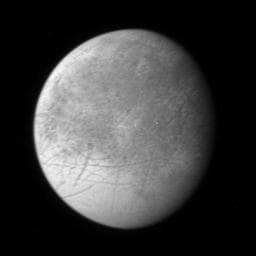
Europa
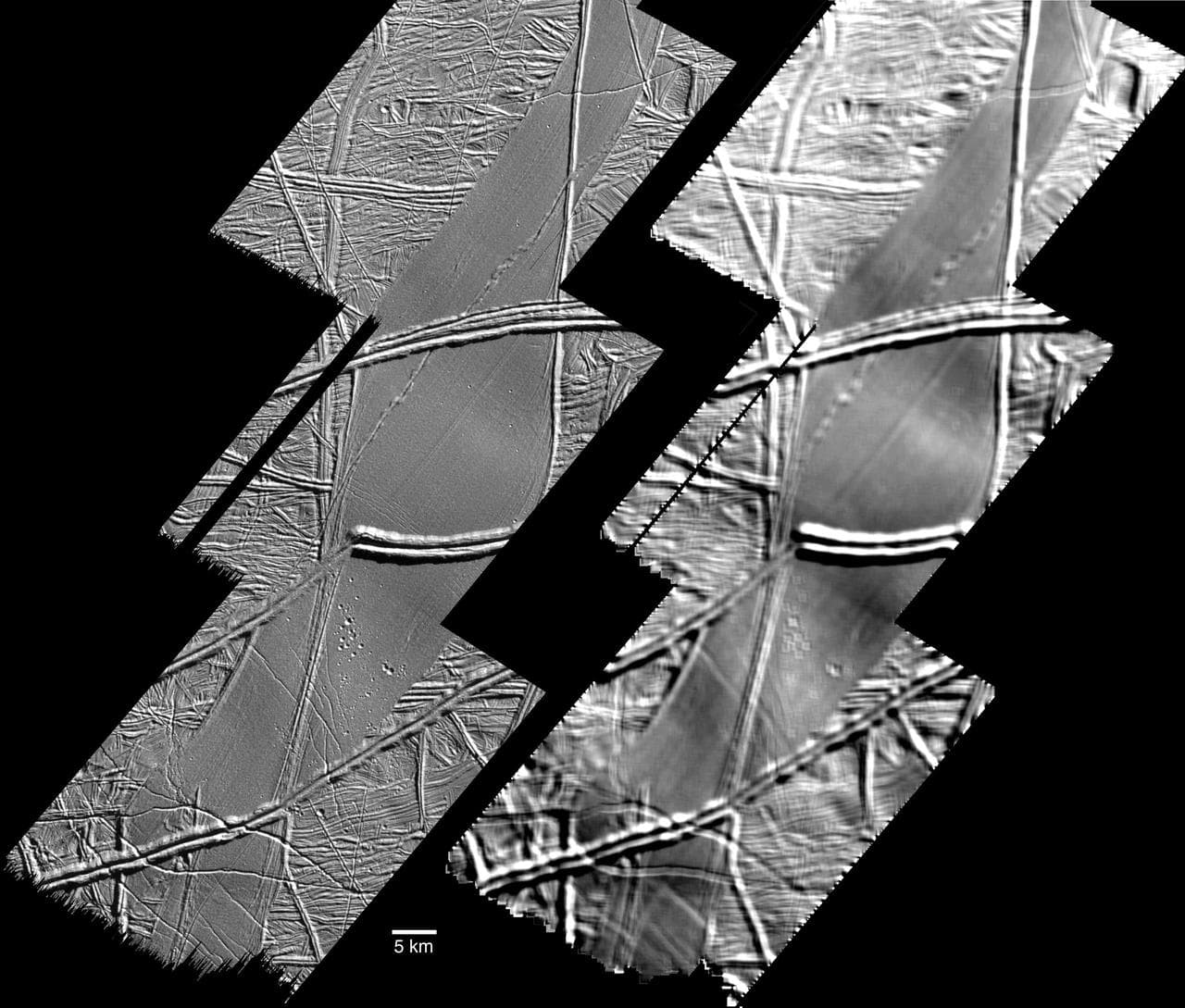
Folds on Europa
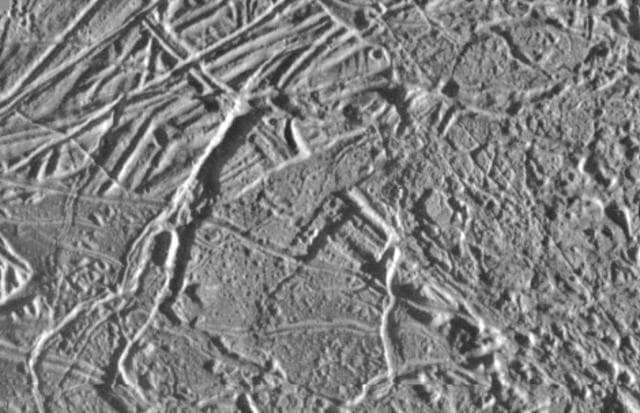
Ridges on Europa
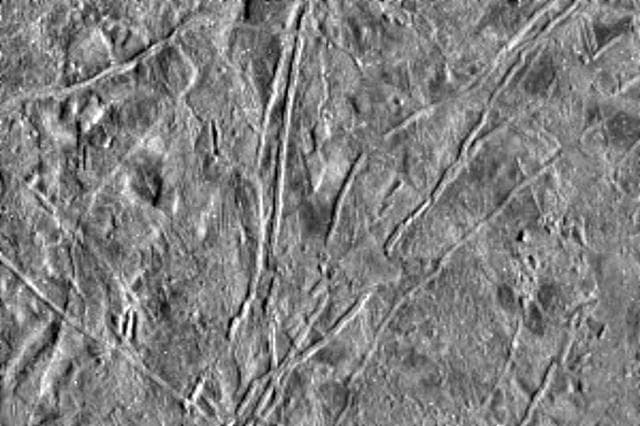
Flows on Europa
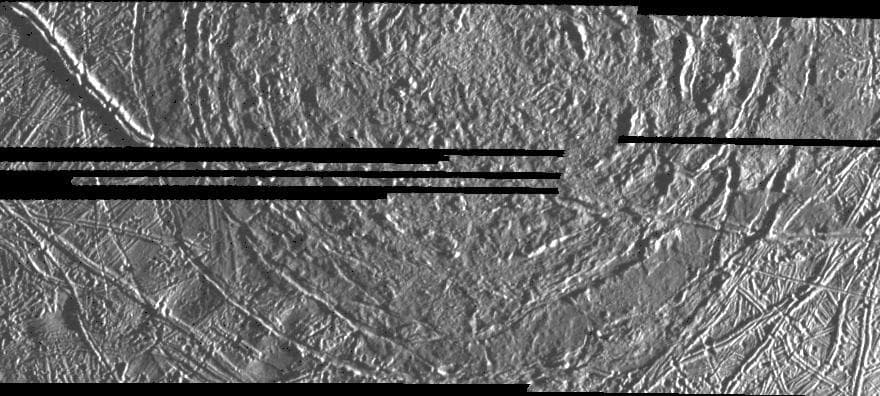
Macula on Europa
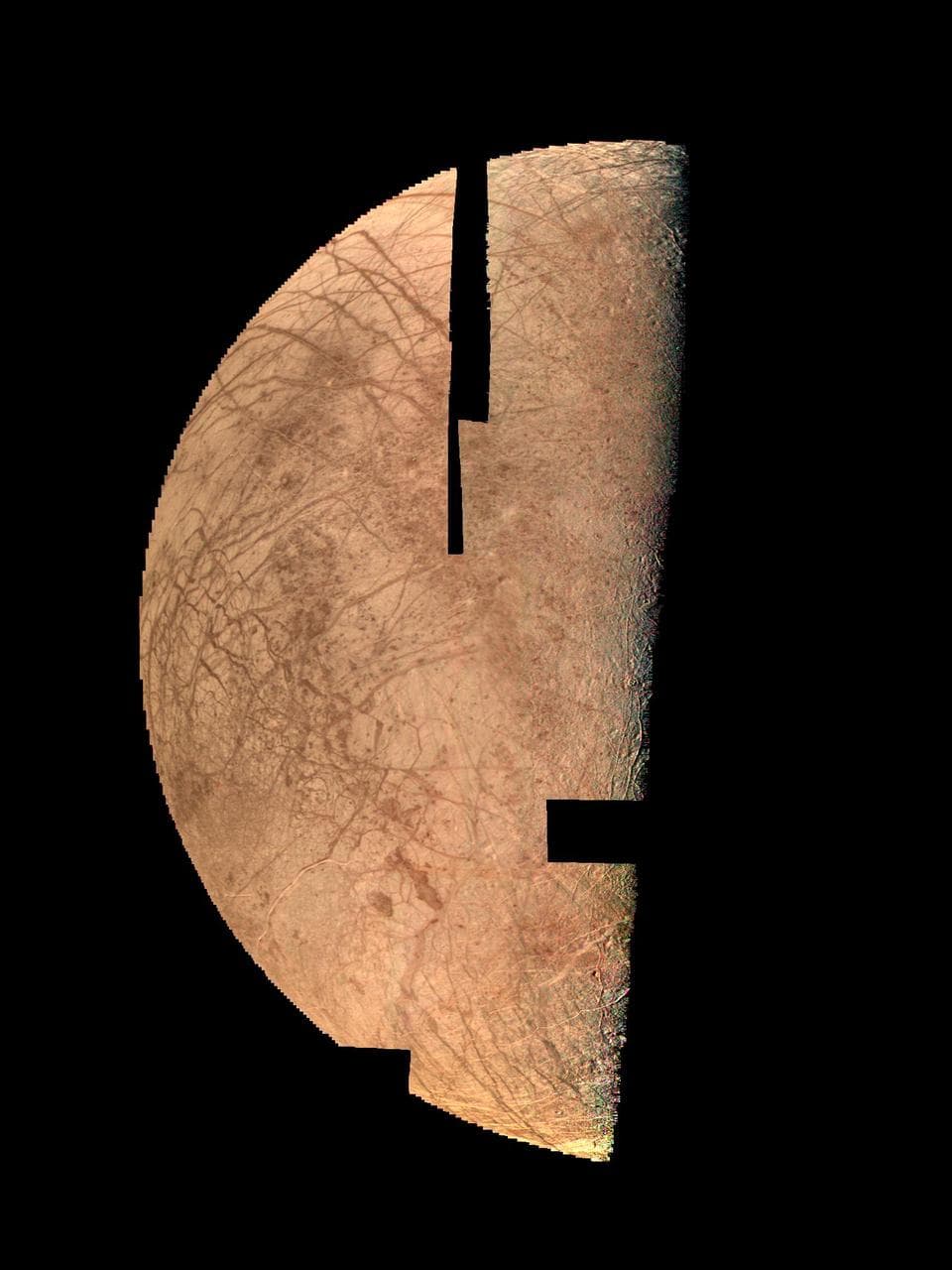
Europa - Mosaic
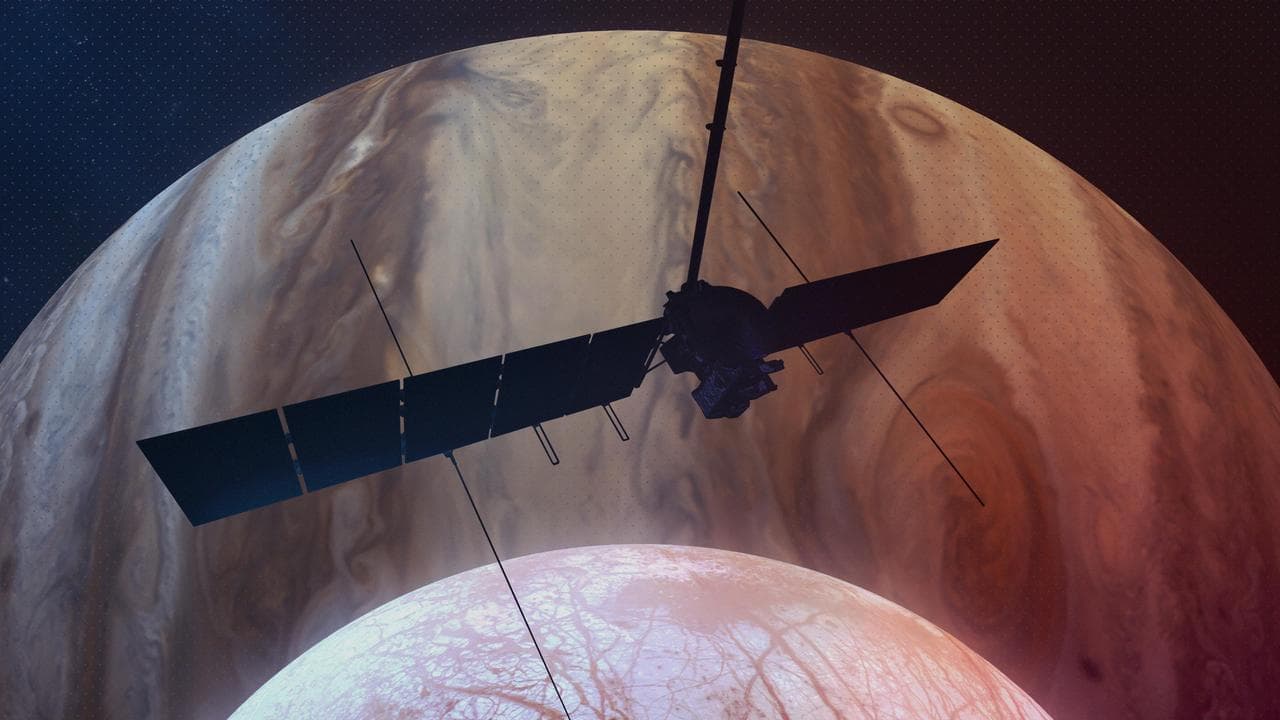
Europa Clipper Spies Jupiter and Europa (Artist's Concept)