01 Pick your destination
Solar Exploration
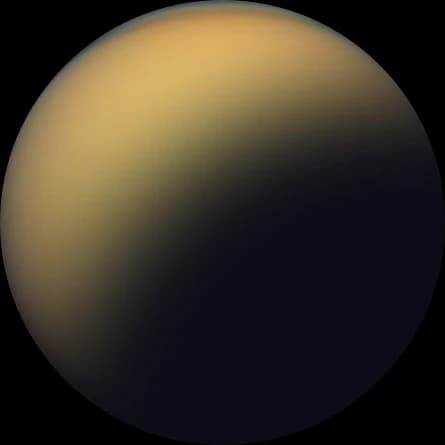
Titan
Saturn's atmospheric moon
Avg. Distance
Year Length
Moons
Composition
Rock and ice core beneath a thick nitrogen atmosphere and hydrocarbon surface lakes
Surface Gravity
1.35 m/s²
Mean Temperature
-179°C
Atmosphere
Thick nitrogen (95%) with methane — the only moon with a substantial atmosphere
About Titan
Overview & Geology
Titan is Saturn's largest moon and the second-largest moon in the solar system, bigger than the planet Mercury. It's the only moon known to have a dense atmosphere, so thick that surface pressure is about 1.5 times that of Earth — thick enough that a person could theoretically glide with strapped-on wings in Titan's low gravity and dense air, if they could survive the cold.
Even more remarkably, Titan is the only place in the solar system besides Earth known to have stable liquid on its surface — but instead of water, Titan's lakes, rivers and seas are made of liquid methane and ethane, kept liquid by temperatures around -179°C. This gives Titan an entire weather cycle, complete with hydrocarbon rain, rivers carving channels, and seasonal cloud formation, all running on chemistry entirely different from Earth's water cycle.
Beneath its hazy orange nitrogen atmosphere, Titan's surface is surprisingly Earth-like in shape if not in substance: dune fields of hydrocarbon-coated ice grains, river deltas, and the largest liquid sea, Kraken Mare, that's bigger than the Caspian Sea. Scientists also suspect Titan hides a subsurface liquid-water ocean beneath its icy crust, making it, alongside Europa and Enceladus, one of the leading candidates in the search for life beyond Earth.
Historical Missions
Exploration Milestones
Titan's thick atmosphere long hid its surface from telescopes, and it took a purpose-built descent probe to finally see through the haze — achieving the only landing ever made on a moon in the outer solar system. A follow-up mission is now being developed to explore Titan's surface directly using an entirely new mode of travel.
Cassini-Huygens
2004The Huygens probe descended through Titan's atmosphere and landed in 2005, sending back the first images from the surface of an outer solar system moon.
Dragonfly
2028A planned NASA rotorcraft mission that will fly between multiple sites on Titan, studying its prebiotic chemistry and potential habitability.
NASA Gallery
Real Mission Photos
Titan

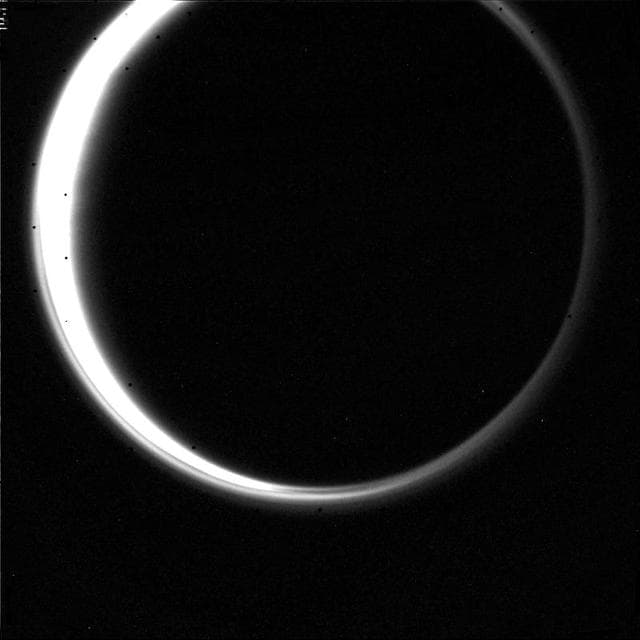
Titan Haze
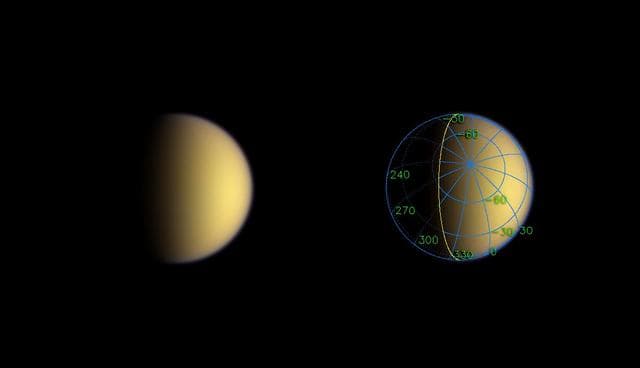
Receding Titan
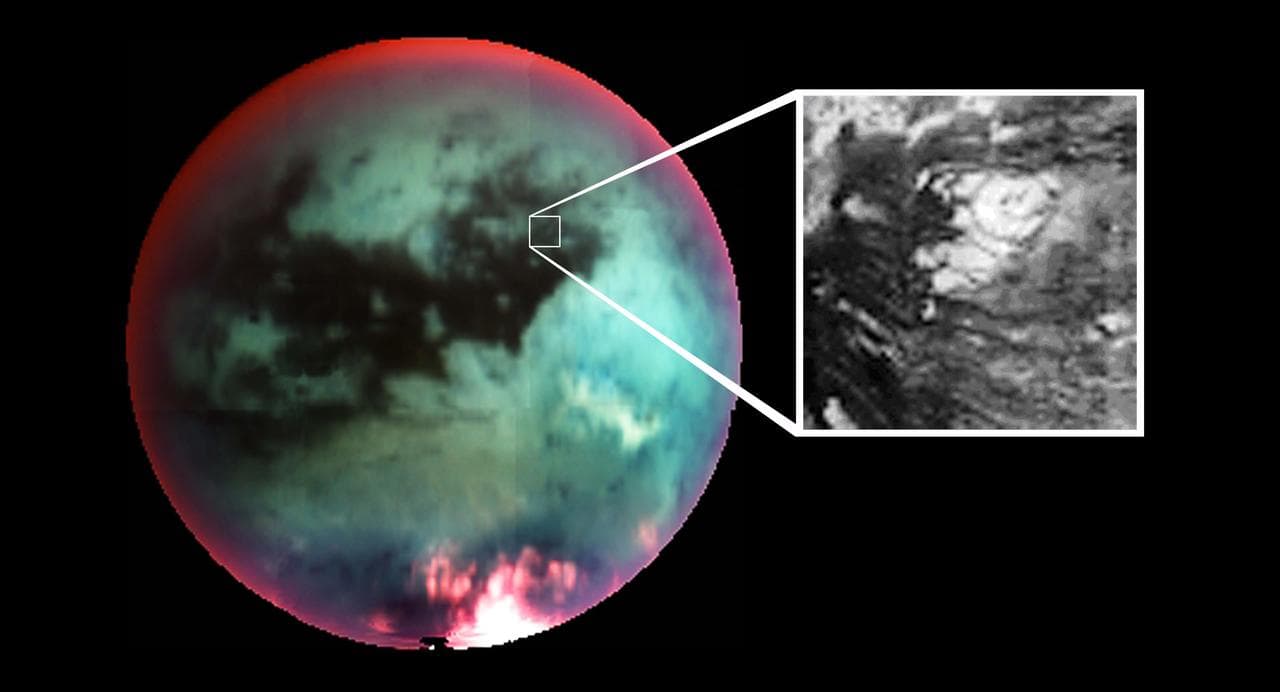
Titan Volcano
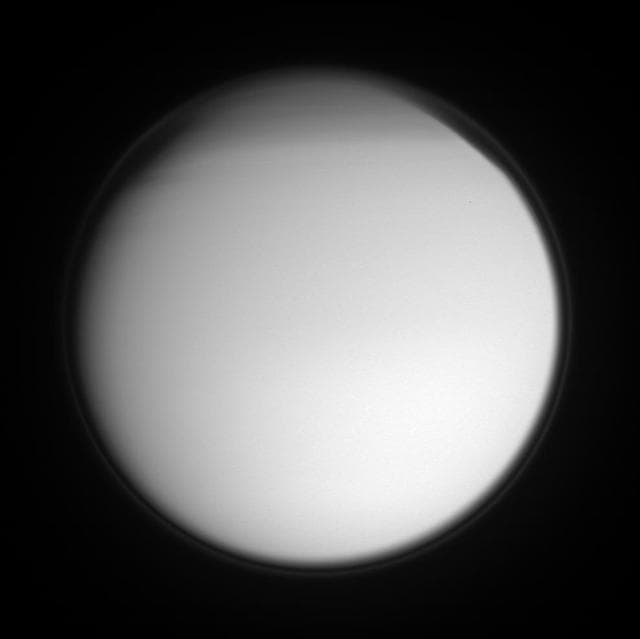
Titan Hazes
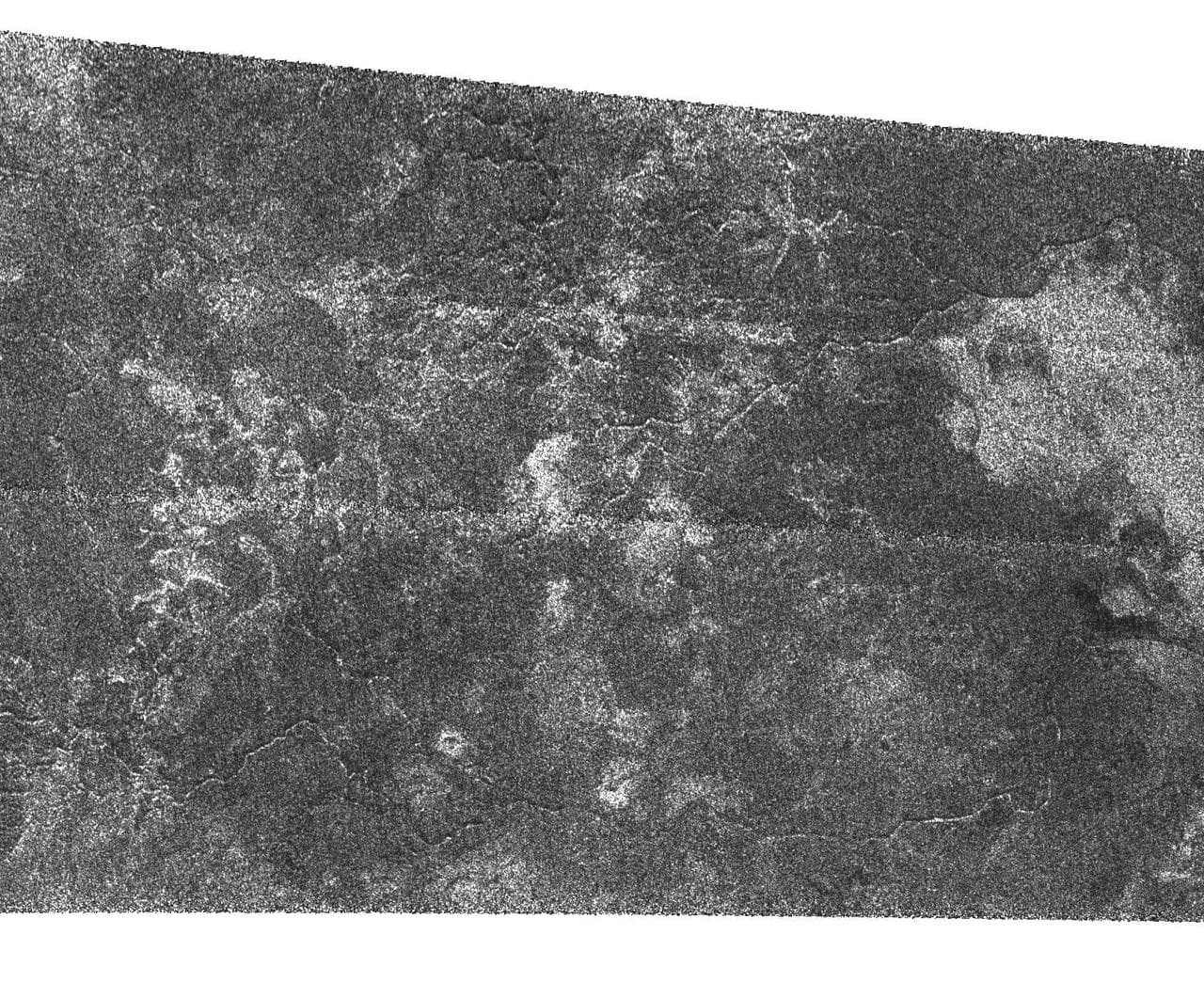
Canyonlands of Titan
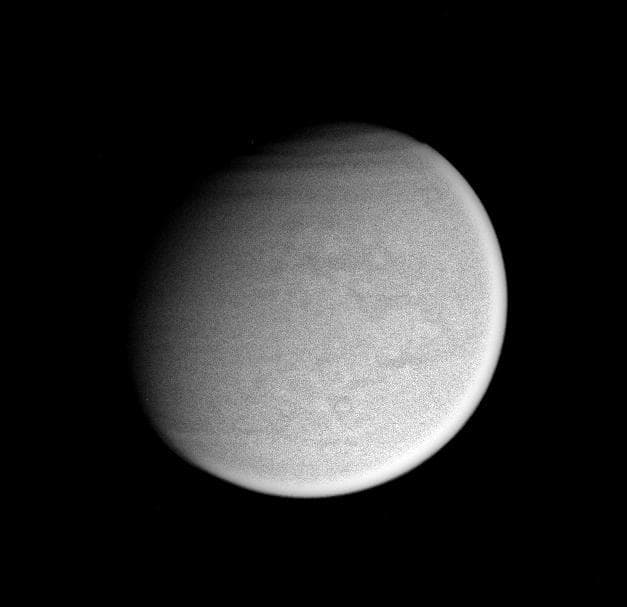
Titan Mask