01 Pick your destination
Solar Exploration
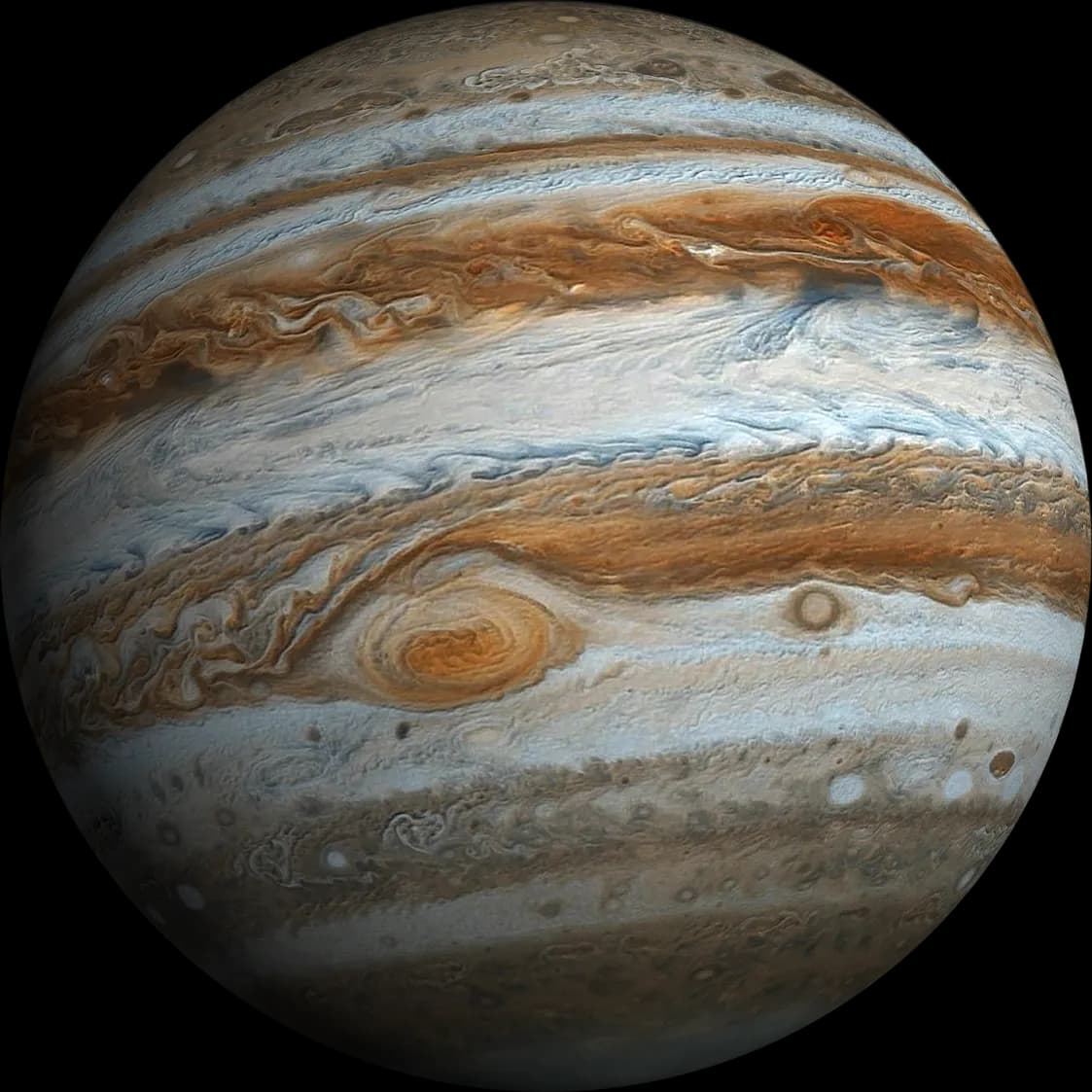
Jupiter
King of the planets
Avg. Distance
Year Length
Moons
Composition
Gas giant — mostly hydrogen and helium around a dense core
Surface Gravity
24.79 m/s²
Mean Temperature
-110°C (cloud tops)
Atmosphere
Hydrogen and helium, banded by fast-moving storm systems
About Jupiter
Overview & Geology
Jupiter is by far the largest planet in the solar system — more than twice as massive as every other planet combined — and its gravity has shaped the solar system's architecture, flinging comets and asteroids out of the inner planets' path over billions of years. It rotates faster than any other planet, completing a full spin in under ten hours, which whips its atmosphere into the distinctive colored bands visible through even a small telescope.
Its most famous feature, the Great Red Spot, is a storm larger than Earth that has raged for at least 190 years and possibly much longer. Jupiter also hosts the four large Galilean moons — Io, Europa, Ganymede and Callisto — discovered by Galileo Galilei in 1610, a discovery that helped prove not everything in the sky orbits Earth.
Beneath its swirling cloud tops, Jupiter has no solid surface to speak of — the atmosphere gradually compresses into a scalding ocean of liquid metallic hydrogen thousands of kilometers deep, surrounding a dense core of rock, ice and metal several times Earth's mass. That metallic hydrogen layer, an exotic state of matter created only under extreme pressure, generates the strongest magnetic field of any planet in the solar system, trapping intense radiation belts that make close exploration hazardous for spacecraft electronics.
Historical Missions
Exploration Milestones
Jupiter's enormous gravity has made it a favorite waypoint for missions heading to the outer solar system, which use a close flyby to gain a 'gravity assist' — a free speed boost — on their way to Saturn, Uranus, Neptune and beyond. It's also been the destination of two dedicated orbiter missions built to survive its brutal radiation environment.
Pioneer 10
1973The first spacecraft to fly past Jupiter and the first to travel through the asteroid belt successfully.
Galileo
1995The first mission to orbit Jupiter, and the first to drop a probe directly into a gas giant's atmosphere.
Juno
2016An ongoing polar-orbiting mission mapping Jupiter's deep interior, magnetic field and the structure of the Great Red Spot.
NASA Gallery
Real Mission Photos
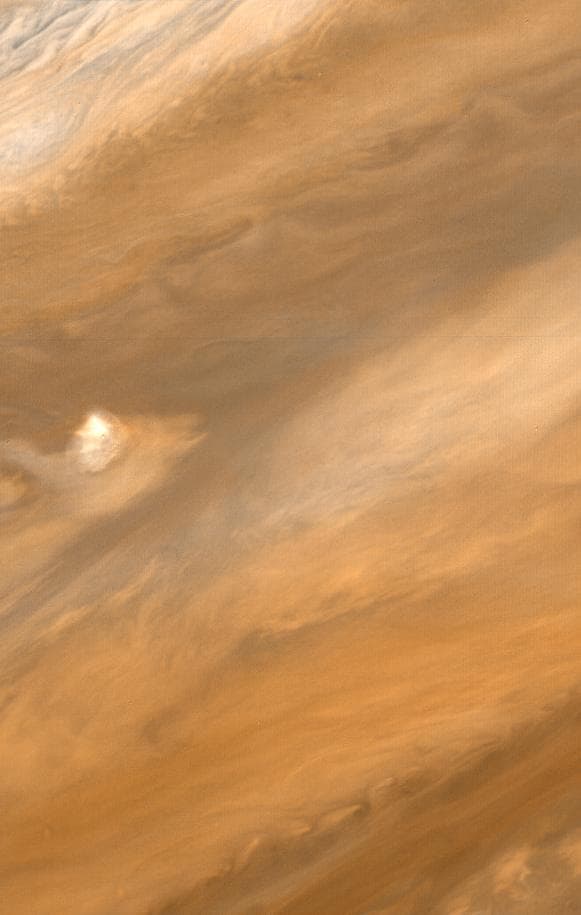
Jupiter Plume
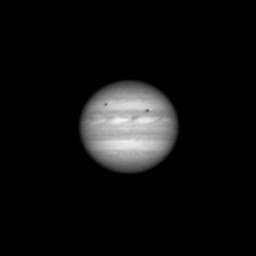
Jupiter Ahoy!
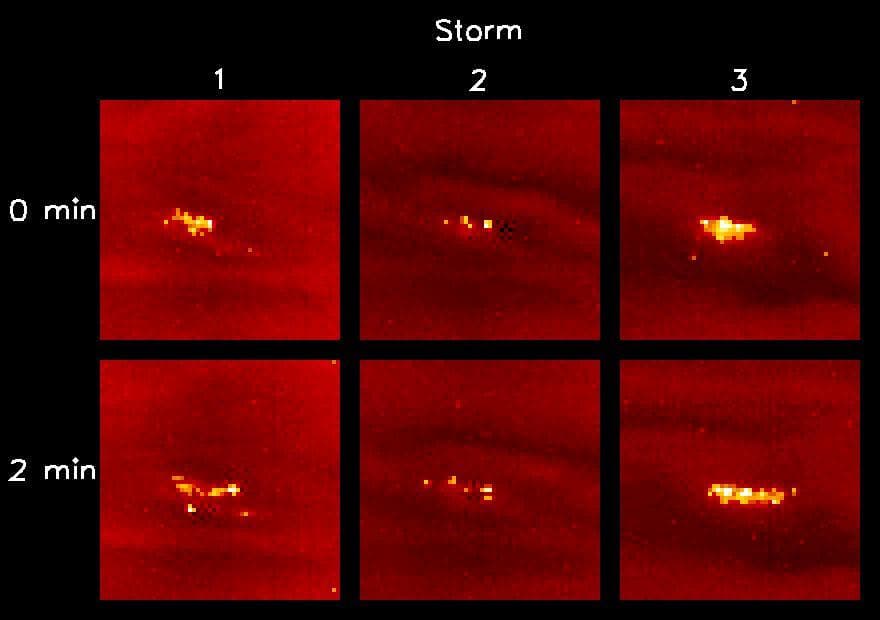
Changing Lightning Storms on Jupiter
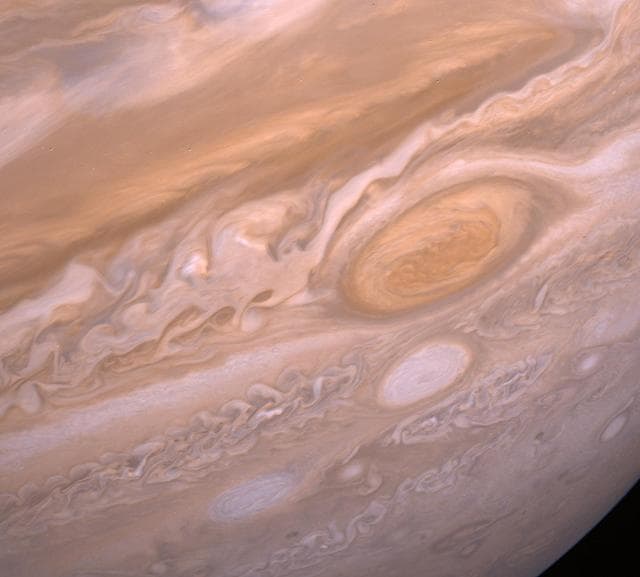
Jupiter Violent Storms
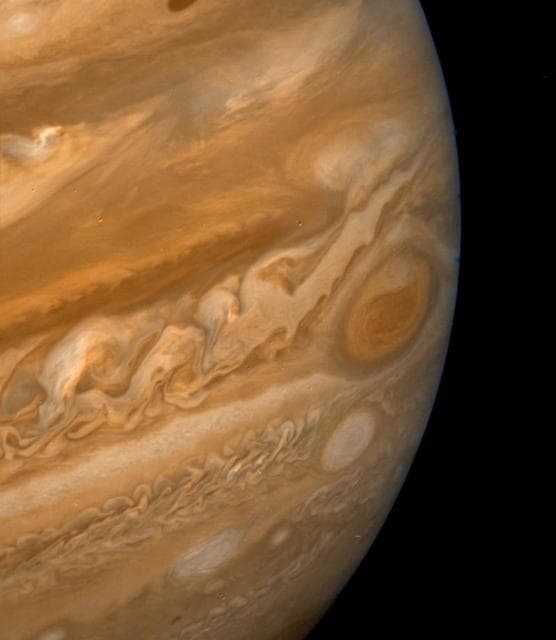
Jupiter Great Red Spot
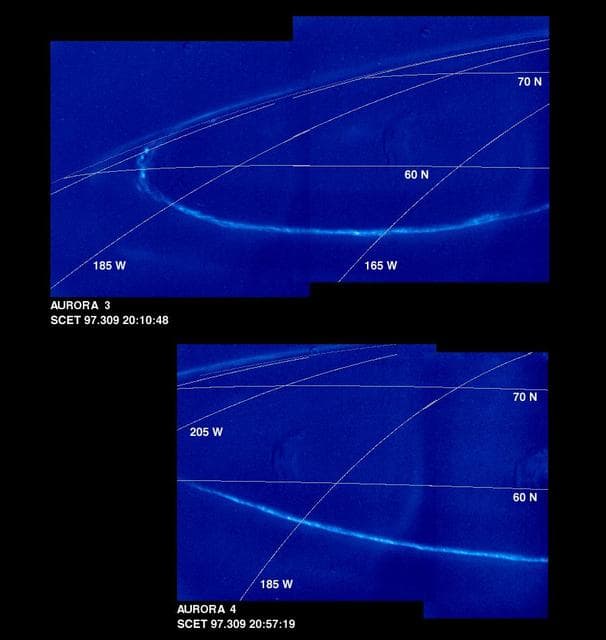
Time Series of Jupiter Aurora
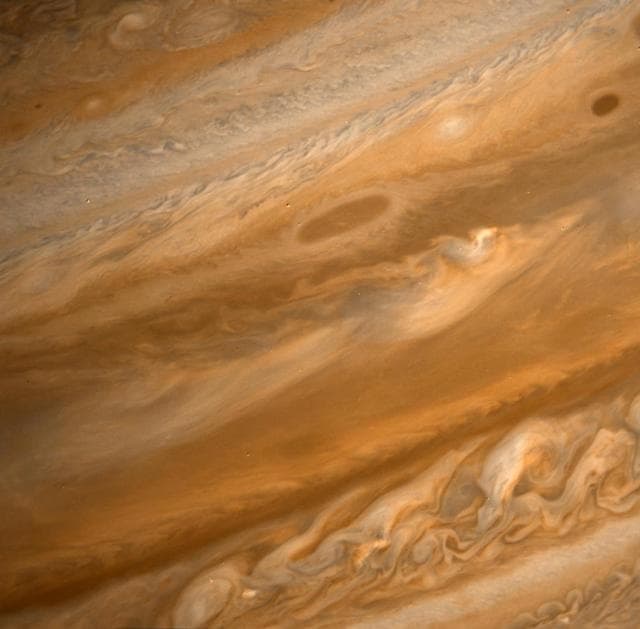
Jupiter from Voyager 2