01 Pick your destination
Solar Exploration
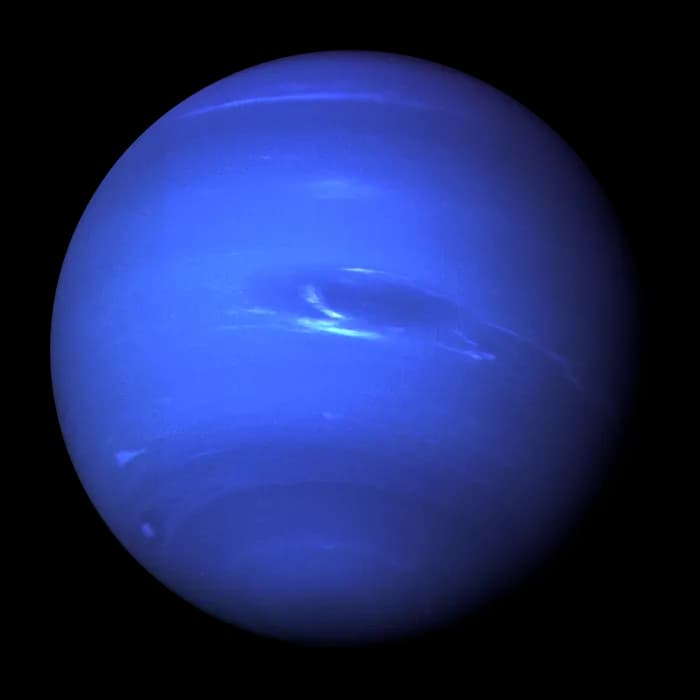
Neptune
The windswept outer giant
Avg. Distance
Year Length
Moons
Composition
Ice giant, similar composition to Uranus
Surface Gravity
11.15 m/s²
Mean Temperature
-201°C
Atmosphere
Hydrogen, helium and methane
About Neptune
Overview & Geology
Neptune is the most distant planet in the solar system, orbiting the Sun at over four and a half billion kilometers — so far that sunlight takes about four hours to reach it, compared to roughly eight minutes for Earth. Despite that distance, Neptune is dynamically the stormiest planet known, with the fastest winds recorded anywhere in the solar system, reaching speeds of up to 2,100 km/h.
Neptune's deep blue color, even more vivid than Uranus's, comes from methane in its atmosphere absorbing red light. Its largest moon, Triton, is unusual among large moons for orbiting backwards relative to Neptune's rotation, strong evidence that Triton wasn't born alongside Neptune but was instead captured from the Kuiper Belt — the same distant region of icy bodies that includes Pluto.
Neptune's atmosphere shows dark storm systems similar to Jupiter's Great Red Spot, including a feature nicknamed the Great Dark Spot observed by Voyager 2 in 1989 that had vanished by the time the Hubble Space Telescope looked again just a few years later — a reminder that these giant storms can form and dissipate on surprisingly short timescales. Beneath the visible atmosphere lies a hot, dense fluid mantle of water, ammonia and methane surrounding a rocky core roughly Earth's size.
Historical Missions
Exploration Milestones
Neptune was the first planet discovered through mathematical prediction rather than direct observation — astronomers calculated its position from irregularities in Uranus's orbit before ever pointing a telescope at it. Like Uranus, it has been visited by only one spacecraft, making a single flyby that remains our only close-up look at the planet to date.
Voyager 2
1989The only spacecraft ever to visit Neptune, capturing the first close-up images of the Great Dark Spot and discovering geysers on its moon Triton.
NASA Gallery
Real Mission Photos
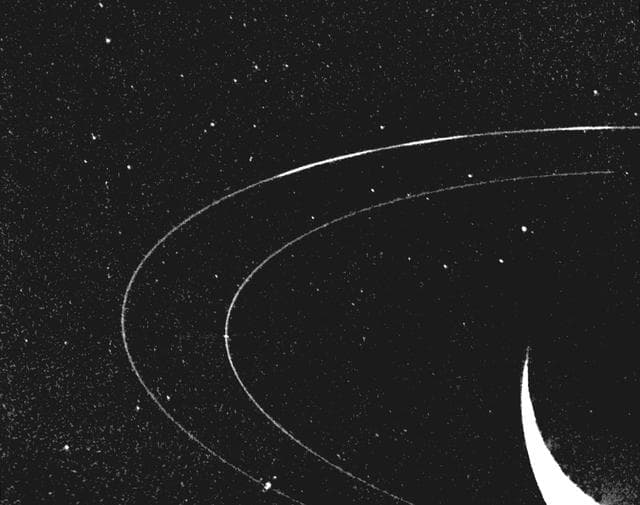
Neptune Rings
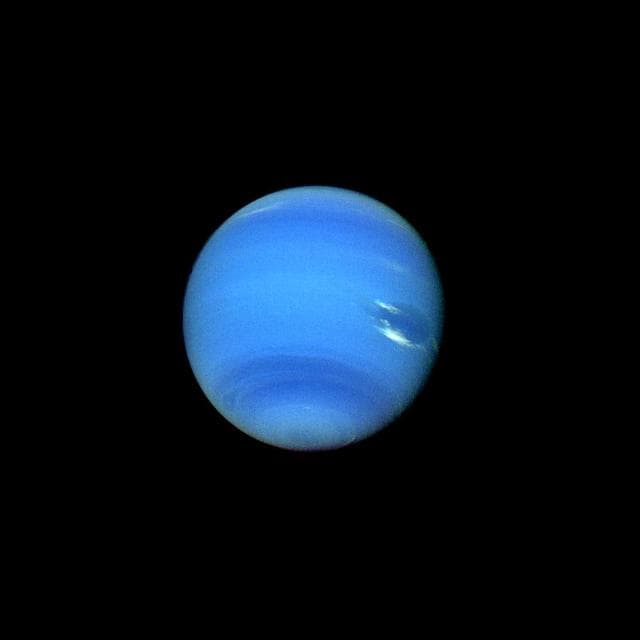
Neptune
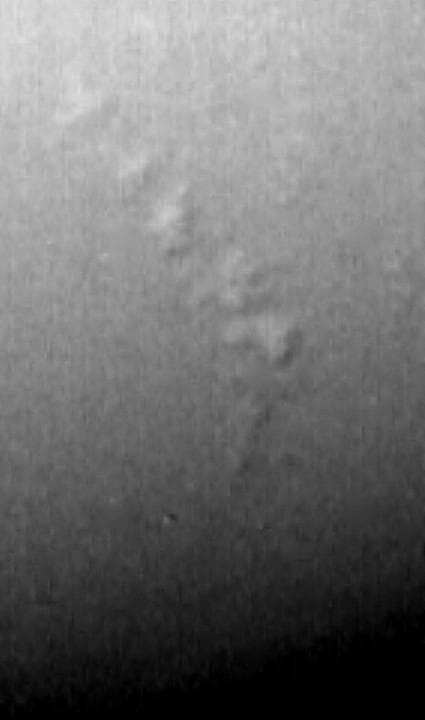
Neptune Shadows
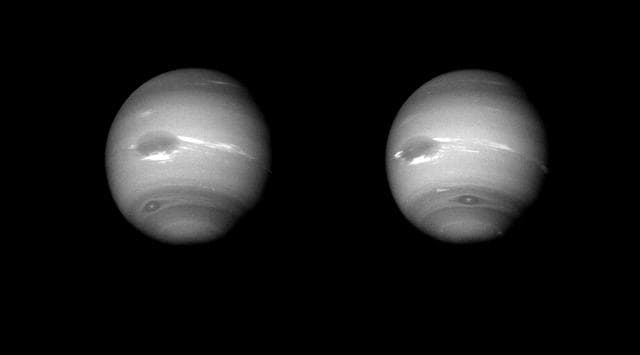
Neptune - Two Images
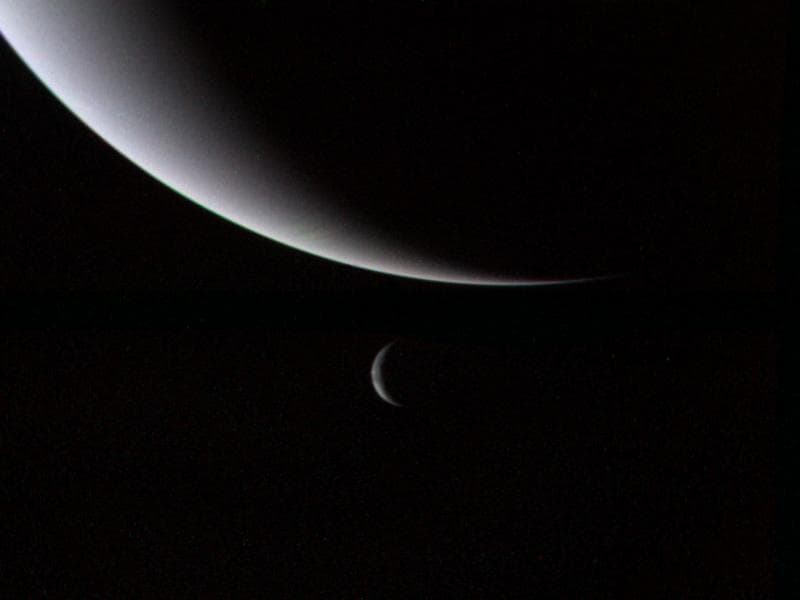
Crescents of Neptune and Triton
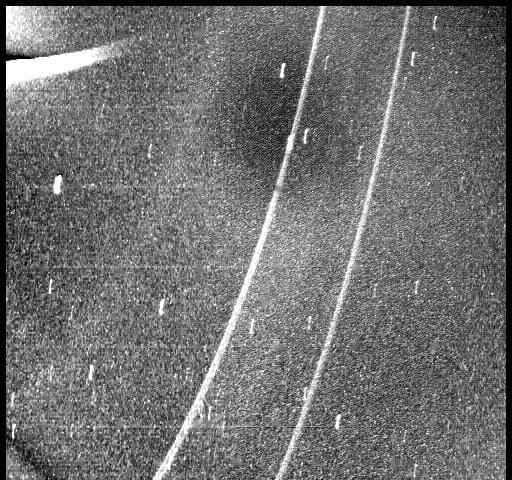
Neptune - Closest Approach
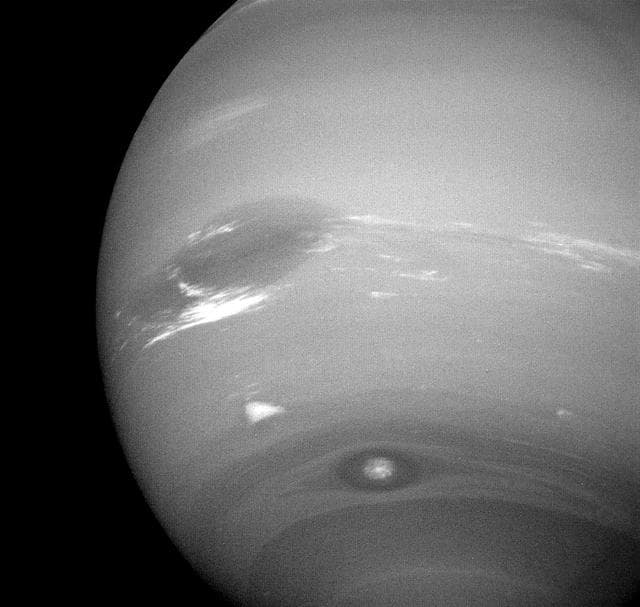
Neptune